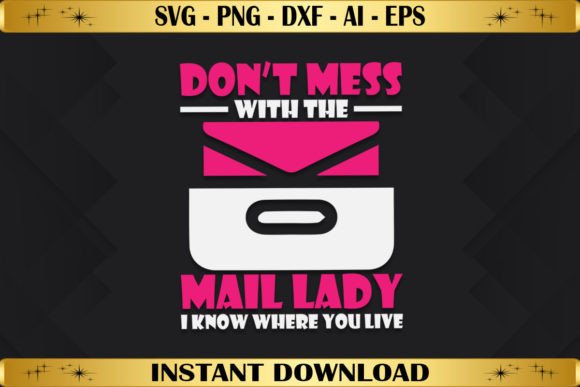
Don't Mess with the Mail Lady: Embroidery Review
As a professional embroidery digitizer and product reviewer, I approach every new graphic asset with a specific question: will this actually stitch out cleanly on fabric? When evaluating Don t Mess with the Mail Lady, my focus shifts immediately from the screen to the hoop. This design carries a distinct attitude and personality that appeals to a specific niche, but translating that bold statement into a tangible handmade product requires careful consideration of structure, density, and application. While the product listing highlights its versatility as print-ready files for T-Shirt Designs and Graphics, my assessment centers on its viability as a machine embroidery design for commercial and personal projects.
First Impressions and Design Personality
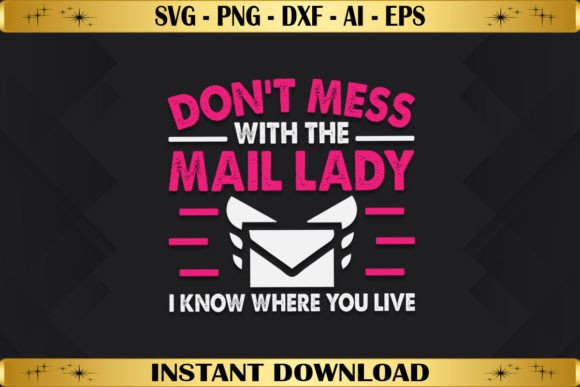
The visual mood of Don t Mess with the Mail Lady is unapologetically confident. It taps into a relatable humor that resonates with postal workers, delivery drivers, and anyone who appreciates a bit of occupational pride. From a design perspective, the layout suggests a balance between typography and illustrative elements. For an embroidery project, this personality is a massive asset because it creates instant recognition. However, the "attitude" in the design must be supported by technical execution. A sassy phrase loses its impact if the lettering is illegible or the satin stitch borders are fraying. The initial vector quality provided in the SVG, AI, and EPS files offers a strong foundation, but the transition to thread requires verifying that the line weights can support proper column widths without becoming too dense or too sparse.
Real-World Application: The Canvas Tote Test
To truly evaluate this asset, I mentally placed it in a real-life scenario: creating a custom embroidered tote bag for a retiring mail carrier. A tote bag design needs to be durable, legible from a distance, and aesthetically pleasing on a textured canvas surface. In this context, Don t Mess with the Mail Lady serves as an excellent centerpiece. The phrase is long enough to warrant a multi-line arrangement or an arched layout, which fits naturally within the rectangular or square hoop size typically used for bags.
For this specific handmade product, I would utilize a combination of fill stitch for larger graphical elements and satin stitch for the text outlines. The canvas texture provides stability, but it also demands a slightly heavier thread weight or adjusted stitch density to prevent the design from sinking into the weave. If you are an Etsy seller or small shop owner creating similar personalized gifts, this design works exceptionally well because it tells a story. Customers aren't just buying a bag; they are buying a validation of their hard work. The emotional connection here drives buyer engagement far more than generic floral patterns.
Navigating Fabric Challenges and Hoop Limitations
While the design shines on stable fabrics like canvas or denim, caution is required when adapting Don t Mess with the Mail Lady for more difficult substrates. As an experienced designer, I have seen too many beautiful graphics fail on stretchy knits or lightweight cottons due to poor stabilization planning.
- Stretchy Fabrics: If applying this to a sweatshirt or performance tee, you must use a high-quality cut-away stabilizer. The design likely contains text elements that will distort if the fabric shifts during stitching. A running stitch basting box is non-negotiable here to anchor the layers before the needle touches the garment.
- Small Hoop Sizes: Resizing is often necessary for baby embroidery or cap designs. Be aware that reducing the overall size affects stitch density and column width. If the original file was digitized for a 5x7 hoop and you shrink it to fit a 4x4 hoop for a patch, the satin stitches may become too narrow to catch the fabric securely, leading to thread breaks or tunneling.
- Dark vs. Light Fabrics: Contrast is king. On dark navy uniforms or black aprons, ensure your thread colors provide sufficient pop. White or metallic gold threads often work best against dark backgrounds to maintain readability. Conversely, on white tea towels, consider using darker thread colors or adding a subtle shadow effect via digitizing to define the edges.
Commercial Viability for Makers and Sellers
For creative entrepreneurs and apparel decorators, time is money. Don t Mess with the Mail Lady offers significant value as a digital embroidery file because of its niche specificity. Generic designs saturate the market, but occupation-specific humor has lower competition and higher perceived value. When listing finished products on platforms like Etsy, using the included PNG file for printable mockups allows you to showcase the design professionally before stitching a single sample. This saves materials and accelerates your listing process.
However, professionalism extends beyond the mockup. The clarity of the stitching directly impacts customer trust. If you are selling custom apparel featuring this phrase, the registration must be perfect. Misaligned letters or puckered fabric around the fill stitch areas will result in returns and negative reviews. Always treat this design as a premium asset. Its bold nature means flaws are more visible than in complex, busy landscapes. Clean execution signals to the buyer that you respect both the craft and the profession being celebrated.
Critical Technical Notes Before You Stitch
Before loading Don t Mess with the Mail Lady into your machine, please adhere to these practical guidelines derived from professional testing standards. The product description confirms you receive SVG, PNG, DXF, AI, and EPS files in a zip folder. These are vector and raster graphics, not pre-digitized embroidery formats like PES or DST. This distinction is vital.
- Digitizing Verification: Since these are print-ready graphics, you or your digitizer must convert them into a machine embroidery design. Do not rely on auto-digitizing software for text-heavy designs like this. Manual digitizing ensures the stitch direction follows the flow of the letters and that the stitch density matches your chosen fabric.
- Test on Scrap Fabric: Never stitch the final version without a test run. Use a scrap piece of the exact material you intend to use for the finished product. Check for thread tension issues, especially at the corners of letters where density builds up.
- Licensing Check: While the files are excellent for creating physical items, always verify the specific commercial license terms included in your download. Confirm whether you can sell the digital embroidery file itself or only the finished handmade product. Protecting your business starts with respecting intellectual property.
- Thread Color Planning: Map out your thread colors before hooping. Because this design relies on attitude, color choices matter. Test different combinations in black and white mockups first to see how values translate without the distraction of hue.
Elevating the Finished Product
Ultimately, Don t Mess with the Mail Lady is more than just a collection of vector lines; it is a potential bestseller for makers targeting the postal and delivery community. Whether you are crafting a holiday gift for a favorite carrier, stocking your boutique with witty apparel, or fulfilling a custom order for a retirement party, the success lies in the details. By respecting the technical requirements of embroidery—proper stabilizer, appropriate hoop size, and mindful digitizing—you transform a digital graphic into a cherished keepsake. The boldness of the message deserves equally bold craftsmanship. Take the time to refine your process with this design, and your finished products will reflect the same reliability and dedication as the mail lady herself.